
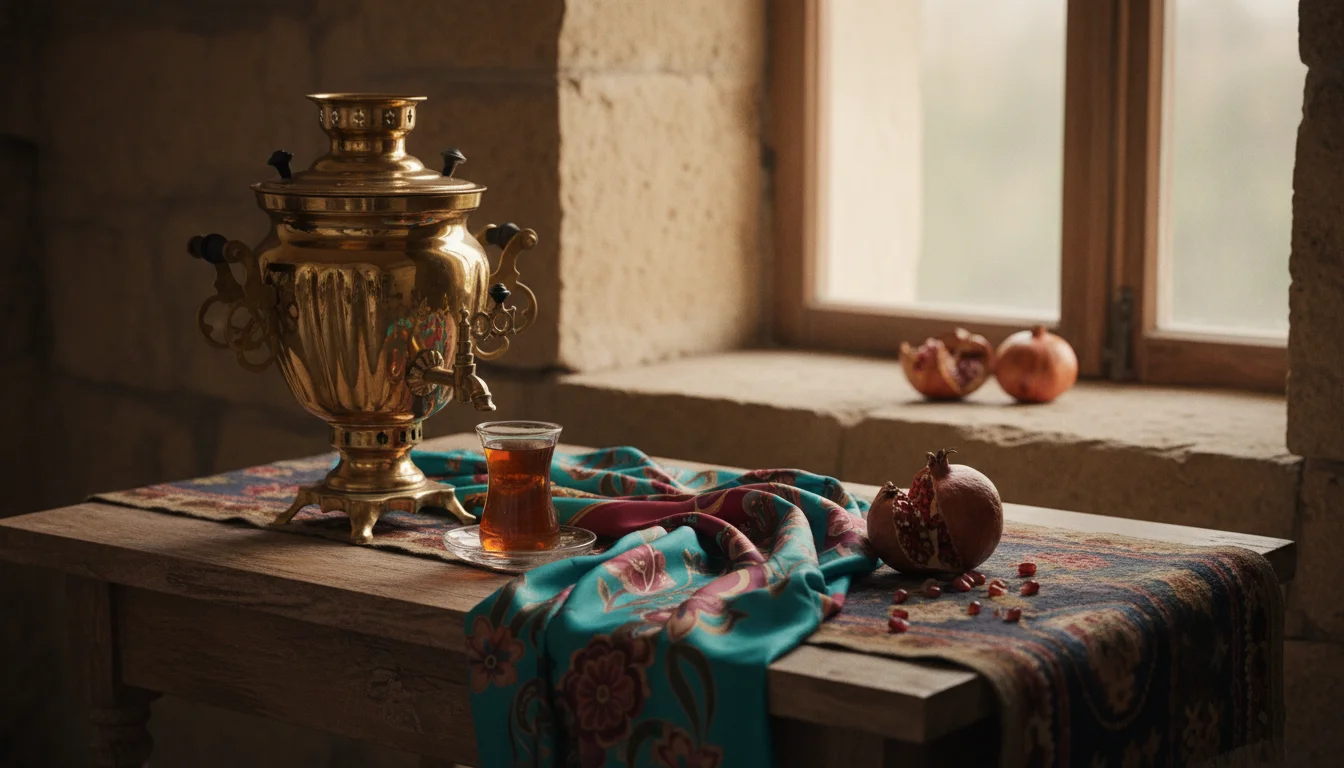
There is a samovar in one of my paintings. To many people it is simply a beautiful object, warm metal, good light, an interesting shape. To me it is a room full of voices, a table that no longer exists, and a smell I could describe with my eyes closed. That is the strange power of an object rendered with love. It carries more than it shows.
I was born in Azerbaijan and I now live in Texas, and I have made peace with the fact that I belong fully to both. For a long time I thought that meant belonging halfway to each. It does not. Heritage is not a suitcase you leave at the door of a new country. It is something you carry inside you and, if you are lucky, something you get to hand to other people.
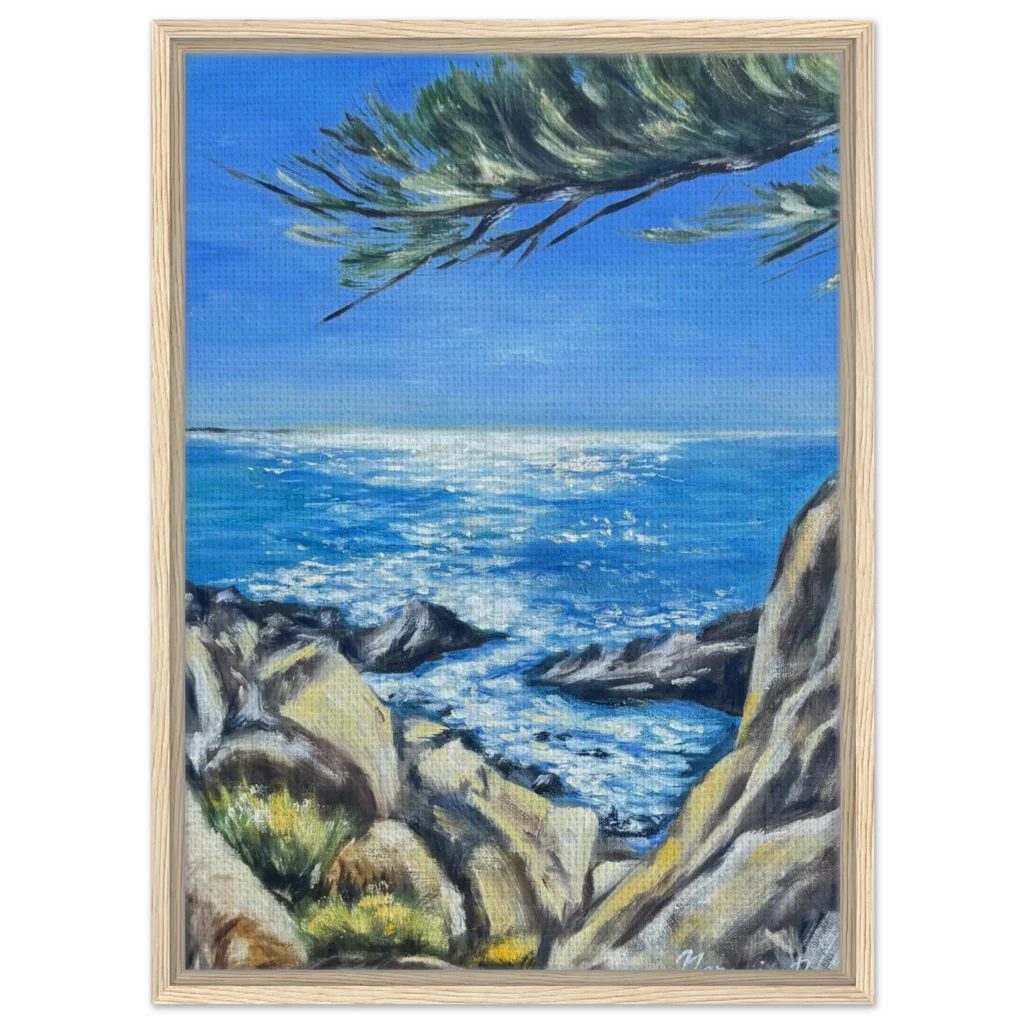
That is why I keep returning to certain subjects. The fortress walls of old Baku. Icheri Sheher in the particular light of memory rather than photography. Tea, boats, textiles, the ordinary furniture of a life lived somewhere specific. I am not painting these things out of nostalgia. I am painting them because specificity is what makes art universal. A painting of a place someone actually loved will always move a stranger more than a painting of nowhere in particular.
My degree covered both fine art and fashion design, and that combination has shaped my whole practice. I work in oil, acrylic, and pastel, and I also paint on silk, because I love the idea that beauty does not have to stay on a wall. A hand-painted scarf goes with you. It travels, it gets complimented at a coffee shop, it becomes part of how someone remembers a season of their life. Wearable art turns a story into something you can put on in the morning.
And every one of us is carrying a story worth telling. When people come to me for a commission, the conversation almost never starts with color or size. It starts with a memory. A house that was sold. A parent’s garden. A trip that changed a marriage. A verse that carried someone through a year they did not think they would survive. My job is to listen closely enough that the finished piece feels less like something I made and more like something I found on their behalf.
I have learned to trust that process, because I believe our stories are not accidents. God gives us our identity and our purpose. Your history, your culture, your language, the particular set of people and places that formed you, none of it was random and none of it is disposable. For years I tried to find my value in what I created, and I never felt satisfied. The relief came when I understood that our value is not in what we create but in our Creator, and that the story I had been handed was authored, not improvised.
That belief has quietly rearranged my studio. When I paint heritage now, I am not defending my past or performing my culture. I am giving thanks for it. When I paint a biblical scene, I am reaching for the same thing from another direction, the light and hope underneath everything. Both are the same act of attention, pointed at a Creator who is generous with beauty.
I would encourage you to take your own story more seriously than you probably do. Cook the dish nobody else in your family remembers how to make. Ask the older relative the question while you still can. Put the photograph in a frame instead of a folder. Let your home say something true about where you come from instead of matching a catalog. A house that tells your story is a house that welcomes people, because it gives them permission to have a story too.
Art is one of the most durable ways we do this. Long after the details soften, a piece on your wall keeps the thread intact, and it does that work for the people who come after you as well. That is not a small thing to leave behind.
If you are ready to bring a piece of story, culture, and color into your own space, come and see what is available. There may be something waiting there that feels like it already belonged to you.